Image

Technical SEO Audit Services for Small Businesses

Technical SEO Audit Services for Small Businesses

Technical SEO Audit Services for Small Businesses

Our technical SEO audit reviews crawl, indexing, speed, mobile, canonical, schema and site-structure issues. Get URL-level evidence, prioritized recommendations and a way to verify each fix. Implementation depends on your agreed scope.

Let’s Get You Found 📍
Smiling man in glasses holding a tablet, with overlay of SEO audit dashboard showing site health, errors, warnings, and performance metrics.

What Is Technical SEO?

Technical SEO reviews how a website is crawled, rendered and indexed, along with performance and site structure. An audit distinguishes a page that cannot be accessed from one that is accessible but has not been selected for indexing.

The useful output is an evidence-backed issue list: affected pages, recommended changes and a way to verify each fix. Technical repairs do not guarantee a ranking.

For a local business, website access and clear structure support discovery alongside useful service content and accurate business information. Profile optimization, content improvements and link research are separate workstreams.

What an Actionable Audit Records

01

Evidence

Affected URL and repeatable test

02

Action

Specific change and responsible owner

03

Verification

Re-test and record remaining limits

Why Technical SEO Matters for Local Rankings

Technical faults can stop a useful page from being fetched or understood. Start with the affected URL and supporting evidence instead of assuming every low-ranking page has the same problem. A crawl error, an unintended canonical and a slow image require different fixes. Confirm the issue, make the smallest relevant change, then repeat the original test. A successful repair is not evidence of a ranking gain until search data supports that conclusion.

Icon
Checks crawlability

find access restrictions and missing links; indexing is a separate Google decision

Icon
Reviews page performance

use measured evidence to prioritize speed and mobile usability improvements

Icon
Checks applicable structured data

compare markup with visible business facts and validation requirements

Icon
Reviews business information

identify inconsistent published details; profile optimization is a separate workstream

Two business owners reviewing online orders while discussing local SEO improvements

Why Technical SEO Matters
for Local Rankings

Why Technical SEO Matters
for Local Rankings

Technical faults can stop a useful page from being fetched or understood. Start with the affected URL and supporting evidence instead of assuming every low-ranking page has the same problem. A crawl error, an unintended canonical and a slow image require different fixes. Confirm the issue, make the smallest relevant change, then repeat the original test. A successful repair is not evidence of a ranking gain until search data supports that conclusion.

Here’s how technical SEO supports your local SEO success:
Here’s how technical SEO supports
your local SEO success:
Icon
Reviews service-page access

check whether intended service pages can be fetched and reached through relevant links

check
Checks crawlability

find access restrictions and missing links; indexing is a separate Google decision

Icon
Reviews page performance

use measured evidence to prioritize speed and mobile usability improvements

Icon
Checks applicable structured data

Compare markup with visible business facts and validation requirements. Correct inconsistencies without promising rich results or higher rankings.

Our Technical SEO Audit

Our Technical SEO Audit

We review crawl, indexing, performance and site-structure concerns, then separate verified faults from items that need investigation. Recommendations should explain the affected URL, supporting evidence and next step. Confirm whether the agreed scope includes an audit, developer-ready instructions or implementation. Content rewrites and backlink work should not be assumed to be part of a technical fix.

We review crawl, indexing, performance and site-structure concerns, separating verified faults from items needing investigation. Confirm whether the agreed scope covers an audit, developer-ready instructions or implementation. Content and backlink work are separate.

Other Issues We Check

Illustrative issue ticket—not a client result. A service URL declares a canonical pointing to a different page. Confirm whether that is intentional. If not, correct the native canonical, check internal links and repeat the live test. Record the deployed change separately from Google’s later selected canonical; the fix alone does not prove indexing or rankings.

  • Page performance and available Core Web Vitals evidence; broken links, redirect loops and orphaned pages; crawl restrictions, sitemap errors and robots.txt issues; metadata consistency and intended heading structure; content duplication or intent concerns requiring editorial review; internal linking and disconnected content; descriptive image alternatives; applicable structured-data errors and conflicts.

  • URL structure and XML sitemap completeness; query-to-page overlap requiring investigation; mobile content availability, rendering and usability; consistent published business information; important customer questions answered where relevant; link concerns referred for separate evidence-based review; search-intent gaps referred for keyword and content review; confusing menus and buried navigation paths.

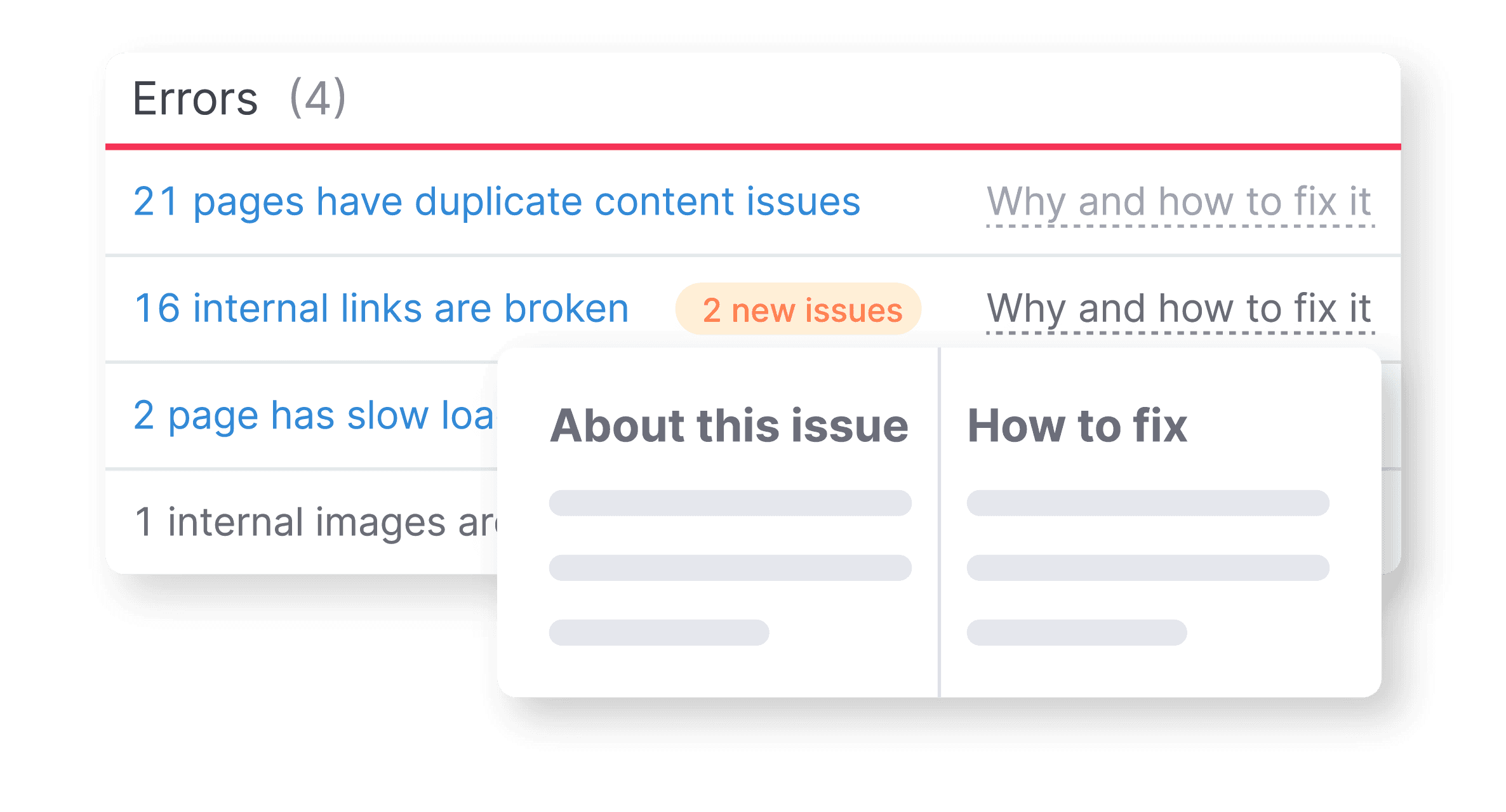
Technical SEO audit highlighting duplicate content issues, broken links, and page speed problems

Identify technical issues, prioritize the next change and verify the repair.

Find the Issue. Verify the Fix.

Technical SEO FAQ

What is technical SEO?

Technical SEO reviews crawlability, rendering, indexing, performance and site structure. It helps identify access and interpretation problems; Google still decides which pages to index and rank.

How is technical SEO different from regular SEO?

Technical SEO focuses on access, rendering, indexing and performance. Keyword research, editorial improvements and link building are related but distinct workstreams.

Why does technical SEO matter for local SEO?

It helps keep useful local service pages accessible and understandable. It does not change searcher distance or guarantee a Map Pack position.

What does a technical SEO audit include?

An audit reviews crawl and indexing evidence, canonical consistency, internal links, performance and applicable structured data. Findings should identify affected URLs, recommended changes and a repeatable verification test.

What does Local Howl actually fix?

Confirm whether your agreed scope includes an audit, developer-ready instructions or implementation. A verified technical issue should have an assigned owner and acceptance test; content rewrites and backlink work are separate.

Will this help me show up in the Google Map Pack?

Technical work can support your website, but Map Pack visibility depends on several factors. An audit or repair is not a promise of a particular local position.

How does this help with AI tools like ChatGPT or Google’s AI Overview?

Google says existing SEO foundations apply to its AI features. Accessible, useful content is the starting point; there is no special schema requirement or guaranteed inclusion.

Can I do technical SEO myself?

You can perform basic checks if you understand the evidence and have appropriate access. Complex rendering, indexing and code changes may require a developer. Preserve a recoverable version and test each change.

How often should I update my technical SEO?

Review after significant site changes and when monitoring reveals a problem. Set a routine review schedule appropriate to your site; a fixed interval alone does not prevent technical issues.

What do I get after the audit?

The agreed scope determines the deliverable: an issue list, developer-ready instructions or implementation. Each verified issue should include evidence, affected URLs, recommended action and a verification test.